UN OWG Proposed Target 1.1
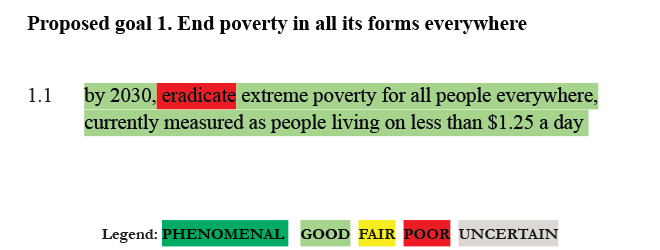
RATING: As written this is POOR (UNREALISTIC) but if amended to an achievable, realistic stretch target then the rating is GOOD. There is evidence to suggest that the alleviation of extreme poverty will not proceed as successfully as it did from 1990 to present, based on historical growth rates and distributions of wealth in countries with current populations of extreme poor (Yoshia et al, 2014; Chandy, Ledlie and Penciakova, 2013; Ravaliion, 2013; Karver, Kenny and Sumner 2011). Previous policies have tended to lift those at the margin of extreme poverty and as such, sustained progress against extreme poverty will be more difficult. For example, in Uganda there is evidence that the attainment of at least 5 years of primary education helps lift individuals out of extreme poverty. Going forward, however it will be more difficult (and costly) than in the past to target and lift the remaining extreme poor who may lack basic primary education.
Additionally, some or many of the extreme poor are not necessarily from the poorest countries. As countries move from mass poverty to much lower poverty rates the residual poverty is often in pockets of geographic or ethnic differences. The growth elasticity of poverty falls sharply as countries move from mass poverty to much lower poverty, so a range of other tools are needed. This makes the process of poverty alleviation not only an economic issue, but also a complex socio-economic and potentially political issue.
Notwithstanding the costs, the benefits of poverty alleviation are large both for the individual in question, as well as society in general. For example, rising wealth within a society is correlated with better health outcomes and lower crime. Additionally, non-poor individuals are less likely to regress to poverty, if surrounded by other non-poor.
Better wording: by 2030, reduce the proportion of people living on less than $1.25 a day (PPP) to 3%
Download the entire report
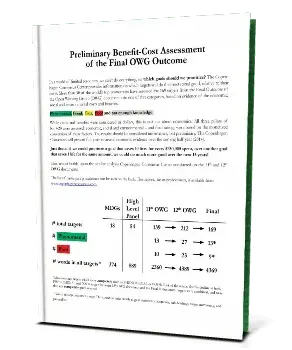
In our recent report, not just the target above, but all 169 targets have been assessed by 60 teams of the world’s top economists. The targets have been categorized into five ratings based on evidence of economic, social, and environmental costs and benefits. While we applaud that the UN Open Working Group's final outcome document contains 43 fewer targets than the previous document, we are concerned that many targets have simply been combined, therefore reducing the number of both phenomenal and poor targets assessed according to our cost-benefit analysis. Our new assessment includes suggestions for how these can be improved as reported in this article by the Financial Times.