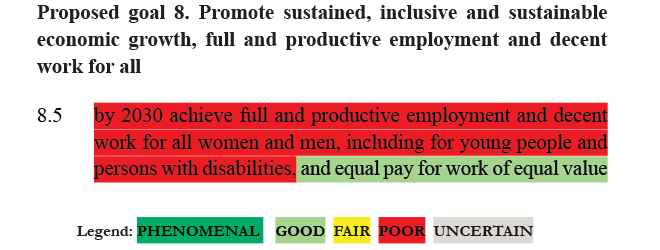
UN OWG Proposed Target 8.5
Full and productive employment and decent work for all
RATING: POOR – this is a poorly specified goal. Some level of unemployment is necessary to generate efficient labor markets. Additionally, there is no tangible, well known policy response to achieve full, productive and decent employment for all. Moreover, what as defined as ‘decent work’ often leads to job protection rules that favor insiders over outsiders, contribute to high rates of youth unemployment and can bias firms choice of optimal size and increase poverty, as has been shown in the case of India (Besley and Burgess, 2014).
It would be better restated as ‘remove barriers to productive employment’. In particular, targeting increased female participation in the workforce has PHENOMENAL benefits relative to costs. There is compelling evidence that the growth miracles of certain Asian economies were driven by low cost policies that allow and incentivize women to work.
Better wording: By 2030, reduce the barriers to productive employment for women
Equal pay for equal work
RATING: GOOD Jacobsen (2013) estimates that if there was a workforce of equal parts men and women, with equal pay, the increase in global GDP would be 17.5% in 2010, even after accounting for lost value from household work done by women. She estimates costs of 2% of global GDP for education and training for a larger workforce. This equates to a BCR of 8.75. Notwithstanding the cultural, political and legal shifts that would be required to implement this in practice, it is likely that such a policy would lead to large benefits and low cost.
Download the entire report
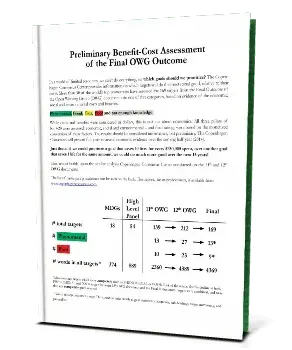
In our recent report, not just the target above, but all 169 targets have been assessed by 60 teams of the world’s top economists. The targets have been categorized into five ratings based on evidence of economic, social, and environmental costs and benefits. While we applaud that the UN Open Working Group's final outcome document contains 43 fewer targets than the previous document, we are concerned that many targets have simply been combined, therefore reducing the number of both phenomenal and poor targets assessed according to our cost-benefit analysis. Our new assessment includes suggestions for how these can be improved as reported in this article by the Financial Times.