
UN OWG Proposed Target 9.2
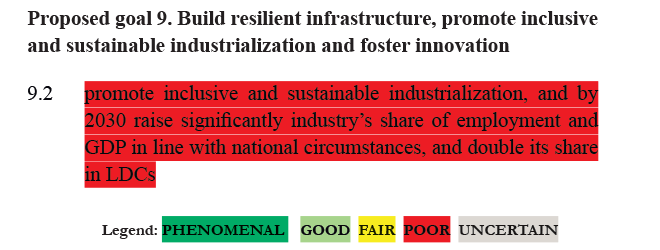
RATING: POOR There appears to be limited empirical support for an activist government industrialization policy.
Firstly, there has to be a compelling reason for a government to actively support an industry, if the private sector is not willing to enter that same space. Secondly, if a market failure does exist, there is limited empirical evidence that governments are good at addressing them at the right time, with the right policies without creating more or different problems. Thirdly, in LDCs with weak institutions, industrialization policies open up the possibility of rent-seeking behavior.
To be sure, industrialization policies can be beneficial if they are targeted. But broad, large scale industrial policies are unlikely to succeed. In the case of the SDGs, preference should be given to goals that support integration of LDCs into existing global manufacturing chains and policies that support entrepreneurship.
Better wording: support the integration of developing country industrial enterprises, particularly in Africa and LDCs, into regional and global value chains
Download the entire report
In our recent report, not just the target above, but all 169 targets have been assessed by 60 teams of the world’s top economists. The targets have been categorized into five ratings based on evidence of economic, social, and environmental costs and benefits. While we applaud that the UN Open Working Group's final outcome document contains 43 fewer targets than the previous document, we are concerned that many targets have simply been combined, therefore reducing the number of both phenomenal and poor targets assessed according to our cost-benefit analysis. Our new assessment includes suggestions for how these can be improved as reported in this article by the Financial Times.